What is Potential Energy?
The energy of any object in the universe can be divided into Kinetic Energy and Potential Energy. Potential energy is the energy an object stores and can release later in various forms. For molecules, this energy depends on the conformation they adopt. Take the cis and trans conformations of butane as an example. The trans conformation is less hindered than the cis. A butane molecule in the trans conformation will need to use energy to rotate the chain and switch to the cis conformation. Conversely, a butane molecule in the cis conformation will release energy when it converts to the trans conformation. In other words, the cis conformation has higher stored potential energy, which is released when it becomes trans, while the trans conformation must absorb energy to reach the higher-energy cis state.
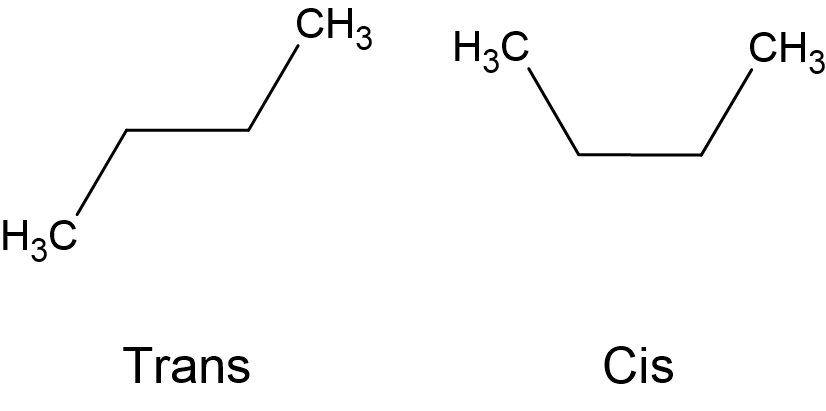
Calculating Potential Energy of Molecules
The potential energy of a molecule in a given conformation can be calculated using several computational approaches. These approaches differ in accuracy, computational cost, and how they describe interactions between atoms.
-
Ab Initio Methods
Ab initio (Latin for from the beginning) methods calculate molecular energy using the principles of quantum mechanics, without relying on experimental data. These methods treat the electrons in the molecule explicitly, which allows them to accurately describe bond formation, bond breaking, and electronic effects. Common ab initio methods include Hartree-Fock (HF) and more advanced techniques like MP2 and CCSD(T). They are very accurate but computationally expensive, making them suitable mainly for small molecules or studies requiring high precision, such as reaction mechanisms or electronic structure analysis.
-
Density Functional Theory (DFT)
DFT is another quantum mechanical approach, but instead of calculating the full electronic wavefunction, it focuses on the electron density of the molecule. This makes it faster than most ab initio methods while still providing good accuracy. DFT is widely used to study medium-sized molecules, predicting stable conformations, reaction energies, and electronic properties. The accuracy of DFT depends on the choice of functional (a mathematical approximation for electron interactions) and the basis set used in the calculation. It is especially useful for molecules for which experimental structures are unavailable, and it can handle systems that are too large for standard ab initio calculations.
-
Molecular Mechanics (Force Fields)
Molecular mechanics is a computational method that calculate the potential energy of a molecule using classical mechanics, without explicitly treating electrons. The total potential energy is considered as the sum of intramolecular and intermolecular interactions:
Etotal = Estretching+Ebending +Etorsion+Enon-bonded
Intramolecular interactions occur between bonded atoms. These include:
- Bond stretching: energy required to stretch or compress bonds from their equilibrium length
- Angle bending: energy associated with changing the angle between three bonded atoms
- Torsion (dihedral) rotation: energy required to rotate around bonds connecting parts of the molecule
Intermolecular interactions occur through space, between atoms that are not directly bonded. These include:
- Electrostatic interactions between charged or polar atoms
- Van der Waals interactions, which describe weak attractions or repulsions at short distances
By summing all these contributions, force fields provide an estimate of the total potential energy of a molecule. This allows chemists to predict stable conformations, explore molecular flexibility, and simulate large systems such as proteins or nucleic acids.
Common force fields include UFF, MMFF94, AMBER, CHARMM, and OPLS, each with slightly different parameters and strengths. Force fields are much faster than quantum mechanical methods, making them suitable for studying large molecules and performing molecular dynamics simulations.
Applications of Potential Energy Calculation
Potential energy is a fundamental principle in physics that is used to describe other phenomena. By implementing it on a computer, it can now understand how molecules behave in nature. For example, if we want to find the minimum-energy conformation of a molecule (the most stable and common), we can change the moleculer conformation and calculate the new potential energy. If it is higher than before, we can revert the change; otherwise, we can repeat the process using the new conformation. This is known as energy minimization, which is an essential step in order to find the most stable conformation of a compound at the beginning of most drug design approaches.
Potential energy calculations can also be used to find the most stable interaction between two molecules, such as docking a compound in a protein's active site. Additionally, potential energy can be used together with kinetic energy to simulate the movement of molecules over time, which is known as molecular dynamics.